Last updated November 21, 2026
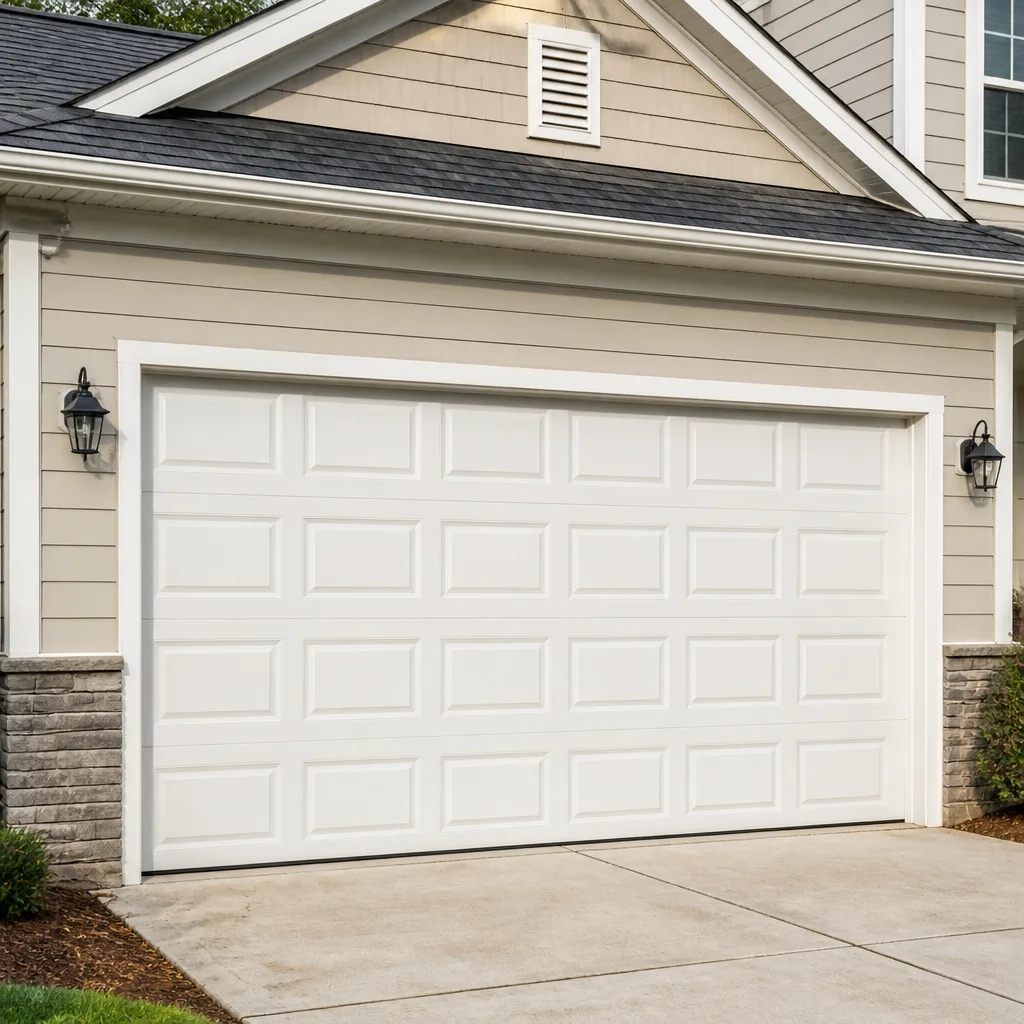 Raised-panel steel
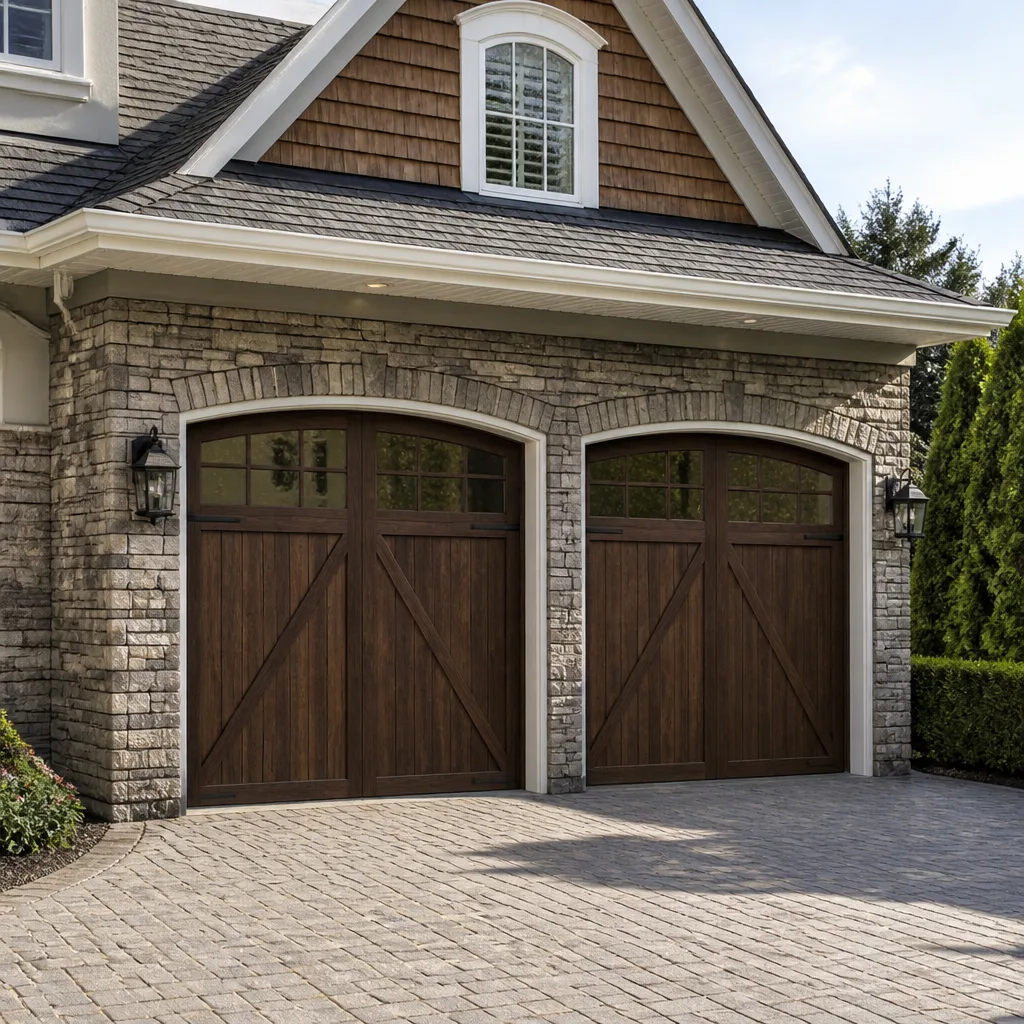 Carriage house
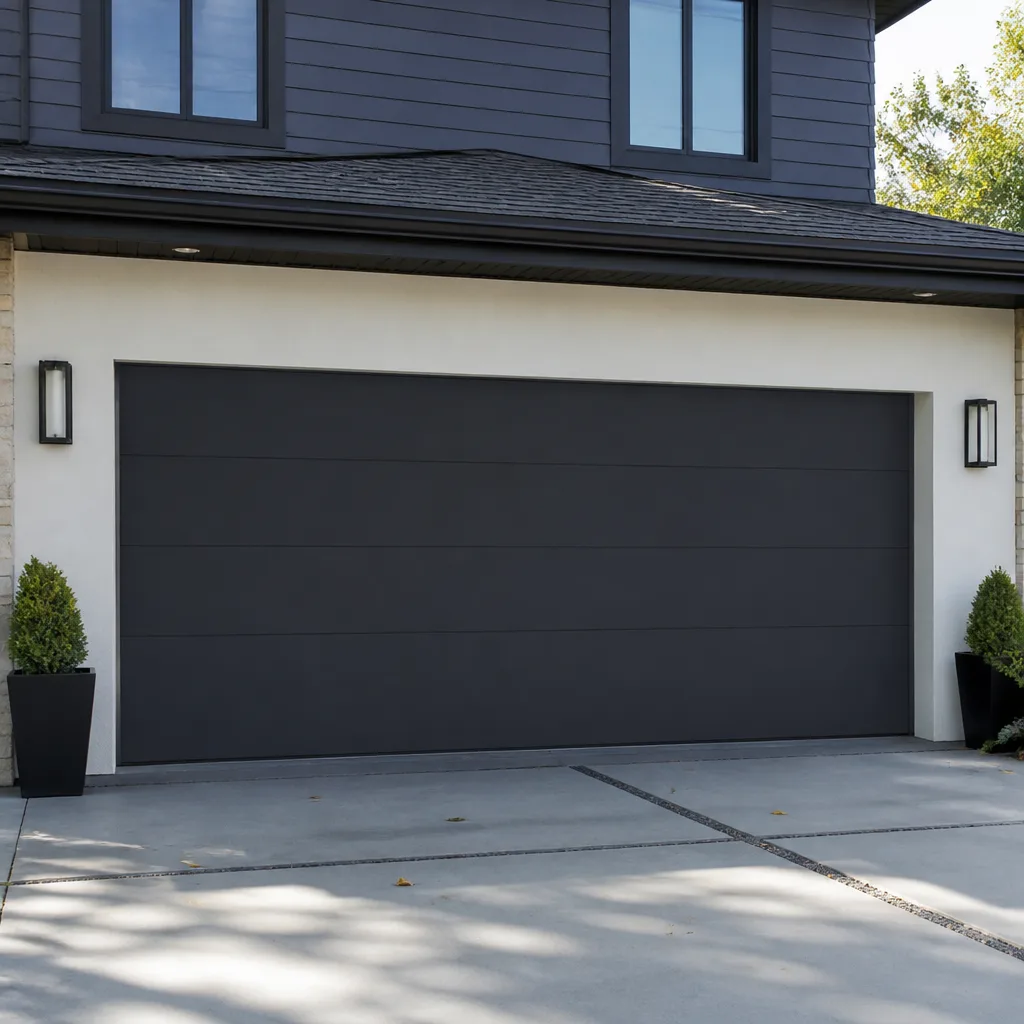 Modern flush
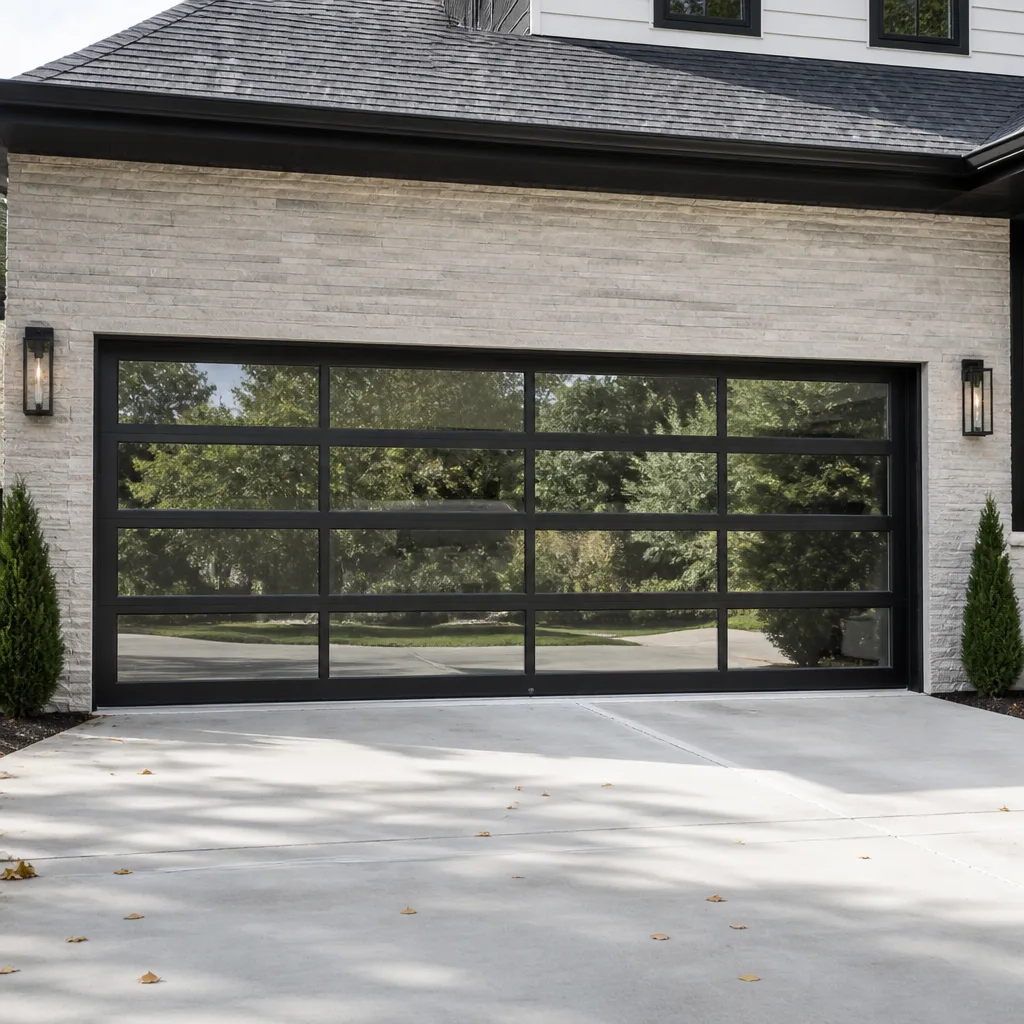 Full-view glass
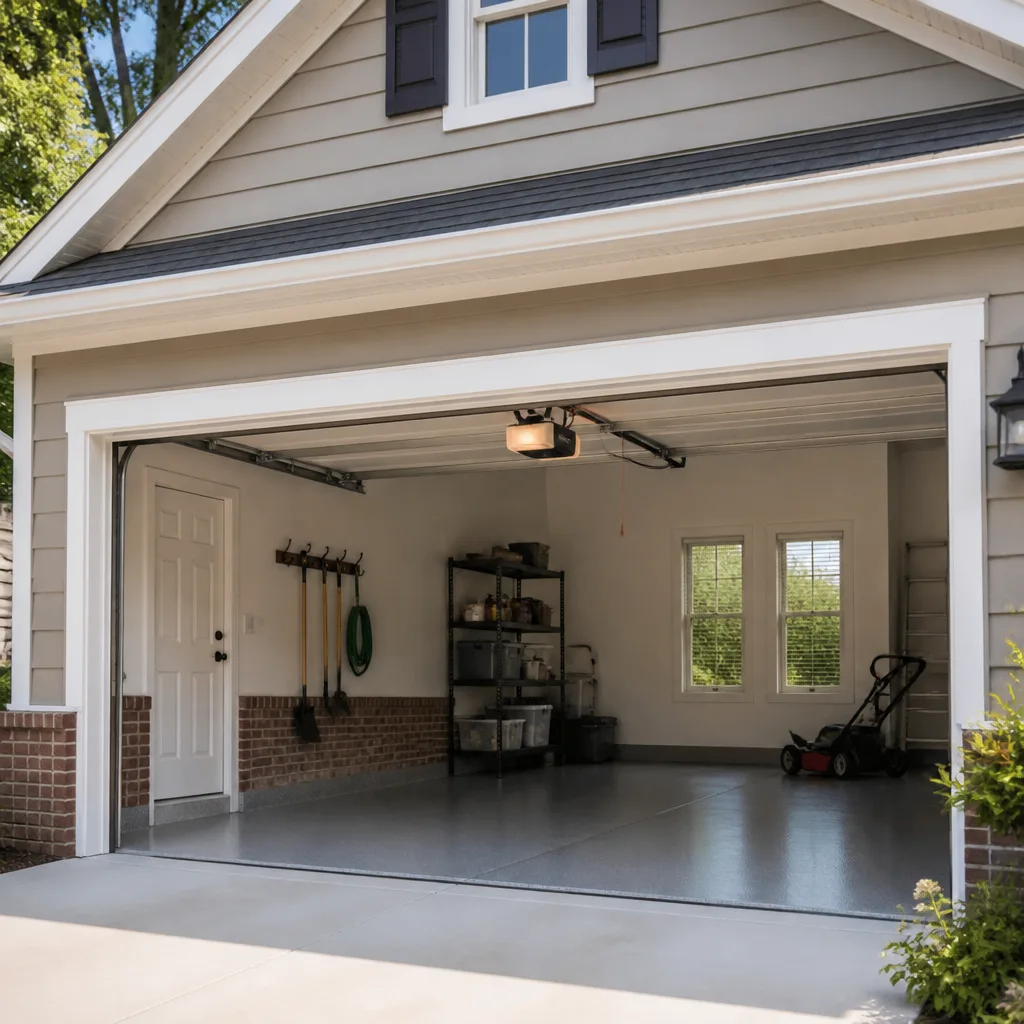 LiftMaster openers
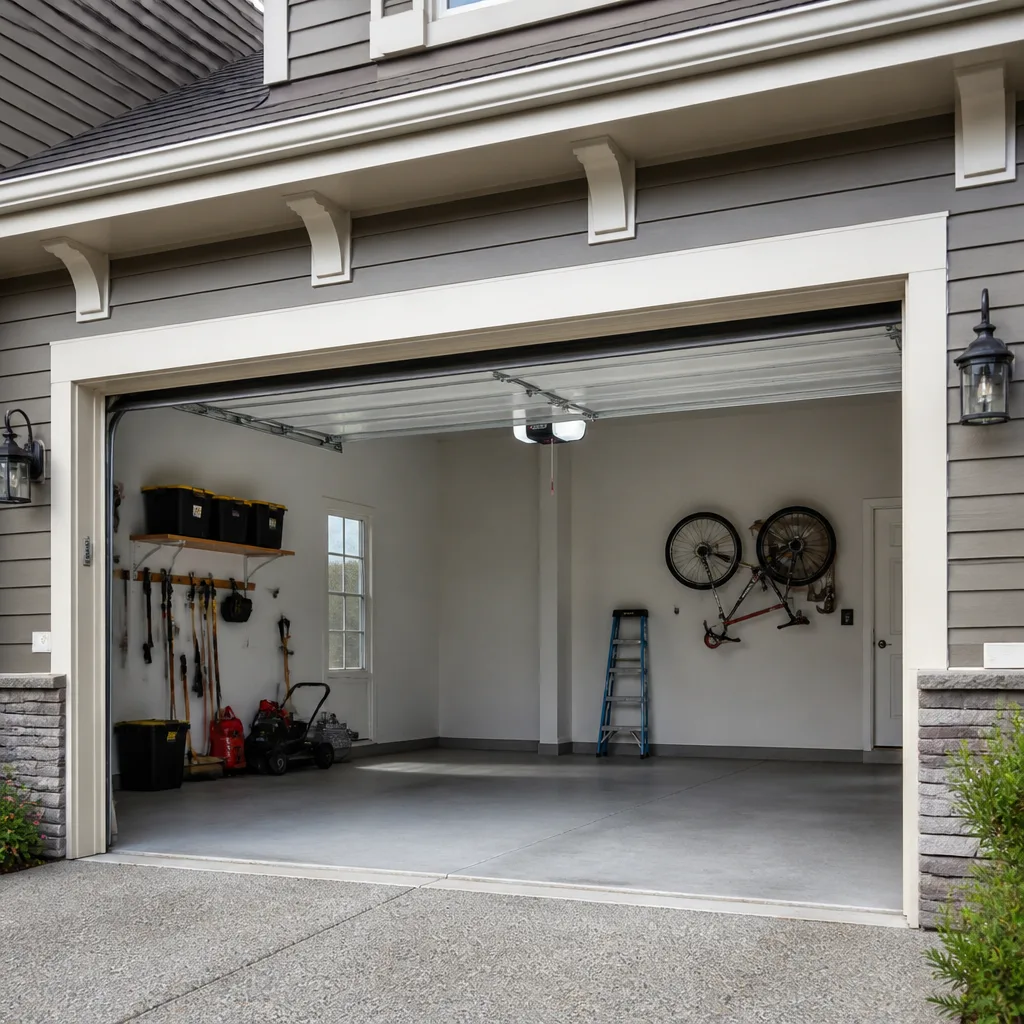 Chamberlain openers
Full 25-point door and opener safety check with every visit - springs, cables, rollers, tracks, and your LiftMaster or Chamberlain opener included
You get a price before we start. It does not change when the pro arrives.
Get your free estimateThe Complete Guide to Garage Doors in Kent
Most garage door guides are written for a homeowner in a vacuum. They explain how a torsion spring works and call it a day, without ever asking what happens when that spring lives in a wet marine climate, behind a 1970s rambler with a sagging header, or on a new Panther Lake build with a tight two-car bay. Kent sits in a climate and a housing mix that change the answer. Rainfall and humidity push you toward certain materials and away from others. The age of the housing stock decides whether you’re repairing, replacing or starting from scratch. This guide treats the garage door as a system – panels, springs, tracks, opener, insulation, seal – and walks through the decisions a Kent homeowner actually faces, from the first sign of trouble to a door that works for the next twenty years. You’ll learn how to read a door’s specs, understand your opener, and know when to fix and when to replace.
Quick Answer
A garage door in Kent is a system, not a single panel, and the right choices depend on your home’s age, your garage’s configuration and the wet climate here. In practice that means prioritizing moisture-resistant materials, an opener matched to your attached garage, and a maintenance schedule built around rain and temperature swings rather than a generic national checklist. For repairs, most jobs can be diagnosed and quoted before any work starts, and springs, openers and panels are all serviceable on their own rather than forcing a full replacement.
Styles & brands we work with
- Raised-panel steel
- Carriage house
- Modern flush
- Full-view glass
- LiftMaster openers
- Chamberlain openers
Table of Contents
- How Kent’s Climate Shapes Your Garage Door
- Choosing Materials That Survive Kent Weather
- Which Opener Drive Type Fits a Kent Attached Garage?
- Reading R-Value for Kent Winters, Not National Averages
- Multi-Brand Specialist vs. Single-Brand Dealer
- Install, Replace or Repair: A Decision Tree
- A Maintenance Schedule for Kent Homes
- What Garage Door Work Typically Costs
How Kent’s Climate Shapes Your Garage Door
Kent’s wet marine climate is the single biggest factor in how long a garage door lasts and how often it needs attention. That rain and humidity do more damage to a door than temperature alone. Moisture works its way into seams, hinges, bottom seals and any raw or poorly finished edge, and over a few winters that shows up as swelling, sticking or rust creeping out from the joints. A door that would last decades in a dry climate can start to bind and peel here within a handful of years if it isn’t built and maintained for wet conditions.
Temperature swings matter too, but in a specific way. The door expands and contracts as the seasons move, and that movement puts stress on the springs, cables and hinges. It also affects the seal at the bottom of the door, which is your first line of defense against water pooling on the garage floor.
What does this mean for a Kent homeowner? A few practical priorities:
- Seal the bottom edge first. A worn bottom seal lets water in, and standing moisture is what rusts the track and rots the frame. Replacing a seal is one of the least expensive ways to protect everything else.
- Watch the hinges and rollers. These are the parts most exposed to damp air. They benefit from regular lubrication more here than in a drier climate.
- Keep the tracks clear of debris. Wet leaves and grit collect in the track and cause the door to ride rough, which wears the opener and springs faster.
- Inspect after heavy rain. A quick look at the floor and the bottom corners of the door tells you whether water is getting in.
None of this is dramatic. It’s the difference between a door that quietly works for years and one that starts complaining every spring. If you’re seeing rust, sticking or water intrusion, that’s the moment to look at garage door repair before a small fix becomes a panel replacement.
Choosing Materials That Survive Kent Weather
Material choice is where the wet climate pushes hardest on your decision. Steel, wood composite and real wood each behave differently when they live outdoors in rain and humidity, and the right pick depends on how much maintenance you’re willing to do.
Steel
Steel is the most common choice for good reason: it’s stable in humidity, doesn’t swell or warp, and holds up well when it’s properly finished. The gauge matters. A thinner-gauge steel door dents more easily under impact and can flex in a way that strains the opener over time; a heavier gauge feels solid and resists denting better. Ask what gauge the panels are and whether the finish is factory-applied, since a factory finish protects against moisture far better than a field-painted surface. Steel will still rust at any exposed edge or scratch, so keeping the finish intact is the ongoing job.
Wood composite
Wood composite gives you the look of wood without the swelling and rot risk of real lumber. It’s a strong fit for Kent because it handles moisture the way real wood doesn’t. It’s heavier than a comparable steel door, though, so the opener and springs need to be rated for the weight.
Real wood
Real wood is beautiful and demands the most care in this climate. It needs regular sealing and refinishing to keep moisture out, and it’s the material most likely to swell, warp or rot if water finds a seam. If you love the look and don’t mind the upkeep, it can work. If you want a set-and-forget door, it’s the wrong material for a wet marine climate.
Insulation
Insulation is a separate decision from the facing material, and it matters most for attached garages, where the door is part of the thermal boundary between your living space and the outside. An insulated door holds warmth better and runs quieter. For a detached garage or a space you don’t heat, insulation is less critical.
Which Opener Drive Type Fits a Kent Attached Garage?
Most Kent homes have an attached garage tucked under or beside the living space, and that configuration should drive your opener choice. An attached garage shares a wall with the house, so noise and safety matter more than they would for a detached shop. The three main drive types behave quite differently.
Belt drive is the quietest option and the natural pick for a garage beneath or beside bedrooms. The belt is softer than a chain, so the door moves with far less noise carried into the house. It costs a bit more, and the belt can wear over time, but for a bedroom wall the quiet is worth it.
Chain drive is the workhorse. It’s durable, handles heavier doors, and costs less than belt drive. The trade-off is noise, which travels into an attached home. If your garage is at the far end of the house from the bedrooms, chain drive is a sensible, long-lasting choice.
Screw drive sits in the middle. It’s quieter than chain, needs less maintenance, and handles cold weather well, but it’s less common and not every opener brand offers one.
Drive type is only part of the picture. For an attached garage, the safety features matter just as much:
- Safety reversal. The opener must reverse when it meets an obstruction. Test this by placing a solid object in the door’s path and confirming it reverses on contact.
- Photo-eye sensors. These are mounted at the bottom of the tracks and stop the door if something crosses the beam. They need a clear line of sight and a clean lens.
- Battery backup. For an attached garage that’s your main entry, a backup lets you get in during a power outage.
- Smart connectivity. If you want to check or open the door from your phone, choose a model with an app and match it to the rest of your system.
When an opener stops responding, it’s not always the opener itself – it can be the sensors, the remote, or the logic board. That’s why garage door opener repair starts with diagnosing the actual model rather than swapping parts.
Reading R-Value for Kent Winters, Not National Averages
R-value describes how well a door resists heat flow, and most marketing quotes national averages that don’t match a Kent winter. A higher R-value means better insulation, but the number only tells part of the story. What matters here is how the insulation is installed and whether the door is sealed against the cold.
Two doors with the same R-value can perform very differently. A door with insulation bonded into the panel holds its value better than one with loose insulation batting that shifts or sags over time. A door with a good perimeter seal and a tight bottom seal keeps cold air out, which does as much for comfort as the insulation itself. So when you compare doors, read the R-value as one input, then look at the construction and the sealing.
For a Kent attached garage, here’s how to think about it:
- If the garage is heated or shares a wall with living space, insulation is worth prioritizing. The door is part of your thermal envelope.
- If the garage is unheated but you spend time in it, an insulated door makes it more comfortable and quieter.
- If it’s a detached, unheated garage, insulation is less critical, and a well-sealed, uninsulated door may be enough.
The point is to match the door to how you actually use the space, not to chase the highest number on a spec sheet. A correctly sized, well-sealed door for your garage usually beats a high-R panel that isn’t sealed at the edges.
Multi-Brand Specialist vs. Single-Brand Dealer
This is a distinction most homeowners only learn the hard way. A single-brand dealer sells and services one manufacturer’s line. That’s fine until you need a part for a different make, or your existing opener is a brand the dealer doesn’t carry. At that point you’re waiting on a special order while your door sits stuck.
A multi-brand specialist works across the full range of equipment you’re likely to own. We work on LiftMaster, Chamberlain, Genie, Clopay, Amarr, Wayne Dalton, Craftsman and Raynor systems, which means the technician diagnoses your actual make and model rather than guessing from a generic playbook. That matters most when you need a part quickly. A specialist who knows the platform can tell you what’s compatible, what’s in stock through supply channels, and what a sensible substitute is if the exact part is backordered.
Here’s the practical difference in a few common situations:
- Your opener is a Genie and it won’t respond. A single-line dealer who doesn’t carry Genie may have to order parts or turn the job down. A multi-brand technician can diagnose the Genie unit directly.
- Your door is a Clopay or Amarr panel. These are widely installed, and brand knowledge means knowing how the sections and hardware fit together.
- You’re comparing a Wayne Dalton door against another brand. A specialist can walk you through how each platform performs in this climate instead of steering you to the one line they sell.
For a homeowner, the takeaway is simple: when something breaks, you want the person at your door to know your equipment, not the equipment they wish you had bought. For a full replacement, a multi-brand view lets you choose based on what fits your home and budget. That’s the thinking behind our approach to garage door installation.
Install, Replace or Repair: A Decision Tree
One of the most common questions we hear is whether a problem calls for a repair, a replacement, or a fresh install. The answer starts with where you are in the life of the door. Here’s how to sort it out.
New construction install
If you’re building or finishing a garage and there’s no door in place, you’re at the start of the line. The decisions here are about opening size, headroom, door type, material and opener, and they should be made together rather than as separate purchases. Getting the headroom and spring system right from the start avoids costly changes later.
Replacement
Replacement makes sense when the door itself is failing in a way that repair can’t reasonably fix – widespread rust or rot, a warped or cracked panel that can’t be sourced, a door that’s simply at the end of its life. It’s also the right call when you’re changing the door’s role in the home, like insulating an attached garage that was never insulated. Replacement is a measured, ordered, scheduled job, so plan for a free measure and a written price rather than a same-day fix.
Repair
Repair is the answer for most single-point failures: a broken spring, a dead opener, a door off its track, a snapped cable, a worn roller. These are fixable on their own, and there’s no reason to replace a sound door because one component failed. A good technician will tell you honestly which situation you’re in.
A simple way to decide
- Is there a sound door already installed? If yes, start with repair and diagnose the specific failure.
- Is the failure a single component – spring, opener, roller, cable, track? That’s almost always a repair.
- Is the door itself structurally failing – rot, widespread rust, warped panels? That points to replacement.
- Are you changing how the garage is used – insulating, heating, or converting it? That’s a replacement decision made with specifications in mind.
- Is there no door at all? That’s a new install, and the specs come first.
Spring work deserves its own note here. Torsion and extension springs are under high tension, and a spring under load can cause serious injury if handled without the right tools and training. We treat garage door spring repair as a specialist job for exactly that reason, and we don’t recommend homeowners attempt it. A broken spring is one of the most common repairs we handle, and it’s also one of the most dangerous to DIY.
A Maintenance Schedule for Kent Homes
A little routine care goes a long way in a wet climate. The goal isn’t to turn you into a technician; it’s to catch the small things before they become expensive. Here’s a schedule we suggest for Kent homes, adjusted for the seasons.
Monthly: Run the door and listen. A door that’s getting louder or rougher is telling you something. Test the safety reversal and the photo-eye sensors by placing an object in the path and confirming the door reverses. Look at the bottom seal for gaps or tears.
Every few months: Lubricate the hinges, rollers and springs with a proper garage door lubricant, not general-purpose oil. Wipe down the tracks and check for debris. Look along the bottom edge of the door and the frame for rust or water damage.
Before winter: This is the big one in Kent. Check the weather seal around the perimeter and the bottom, since winter rain is when leaks show up. Confirm the springs and cables look intact. If you have an opener with a battery backup, test it. Clear the tracks of wet leaves and grit that collect in the fall.
Annually: Have the door looked at by someone who knows the equipment. A trained eye catches wear on springs, cables and hinges that’s easy to miss, and it’s the best way to avoid a failure at an inconvenient moment. If anything looks off between visits, don’t wait.
The theme is consistency over intensity. Ten minutes a month and a seasonal check keep most doors running well for years. If you’d rather have a professional do the seasonal look-over, that’s a reasonable call, especially for older doors or heavy insulated models.
What Garage Door Work Typically Costs
Costs vary with the job, the brand, the part and the condition of the door, so treat any figure as a typical range rather than a fixed price. The written estimate you receive before work starts is the number that matters. Here’s a general sense of how the work breaks down.
- Spring repair: A typical range for a single torsion or extension spring replacement, with the door’s size and spring type affecting the total. A matched pair is usually replaced together, so expect roughly double a single-spring figure when both are done.
- Opener repair: Ranges depend on whether it’s a sensor, remote, logic board or the whole unit. Many opener problems are fixable without replacing the unit.
- Panel or section replacement: Priced per section and by material, so a steel section and a composite section land in different ranges.
- Track and roller service: Often a lower-cost repair that resolves a door that’s binding or riding rough.
- Full replacement or new install: The largest range, driven by door size, material, insulation and opener. This is a measured, ordered job with a written price.
Two things are true across all of it. First, the price is quoted and agreed before any work begins, so there’s no surprise invoice after the fact. Second, a free estimate costs you nothing and gives you a real number to compare against. For urgent problems, we offer same-day and emergency response, and for planned work like a replacement we’ll measure and give you a written price. Call (877) 606-8952 for an exact quote – estimates are free.
Common Mistakes to Avoid
- Ignoring a worn bottom seal. It’s the cheapest part on the door and the one that lets water in. Left alone, moisture rusts the track and rots the frame, turning a small fix into a bigger repair.
- Assuming every problem means a new door. Most failures are single components – a spring, an opener, a roller. Replacing a sound door because one part failed is money spent for no reason.
- Choosing a door by R-value alone. A high R-value with a poor perimeter seal performs worse than a well-sealed door with a lower rating. Match the door to how you use the garage.
- Buying whatever opener is on sale. Drive type, weight rating and safety features should match your door and your attached-garage layout, not the price tag.
- Skipping lubrication in the wet season. Hinges, rollers and springs need regular lubrication here more than in a dry climate. It’s the difference between smooth operation and premature wear.
- Trying to fix a spring yourself. Torsion and extension springs are under high tension, and a mistake can cause serious injury. This is a job for a trained technician with the right tools.
- Not getting the price in writing first. A verbal estimate that changes after the work starts is a problem you can avoid by insisting on a written price before anyone touches the door.
See the difference
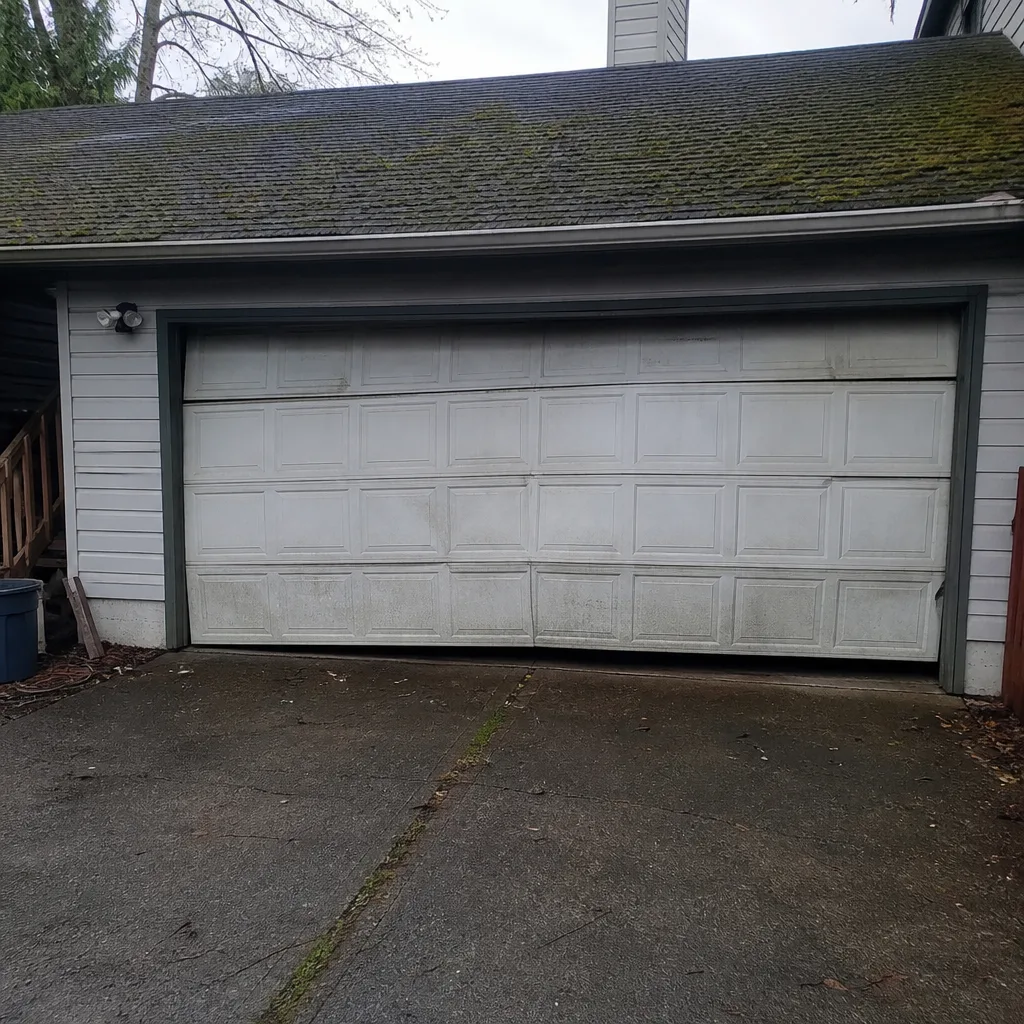 Before
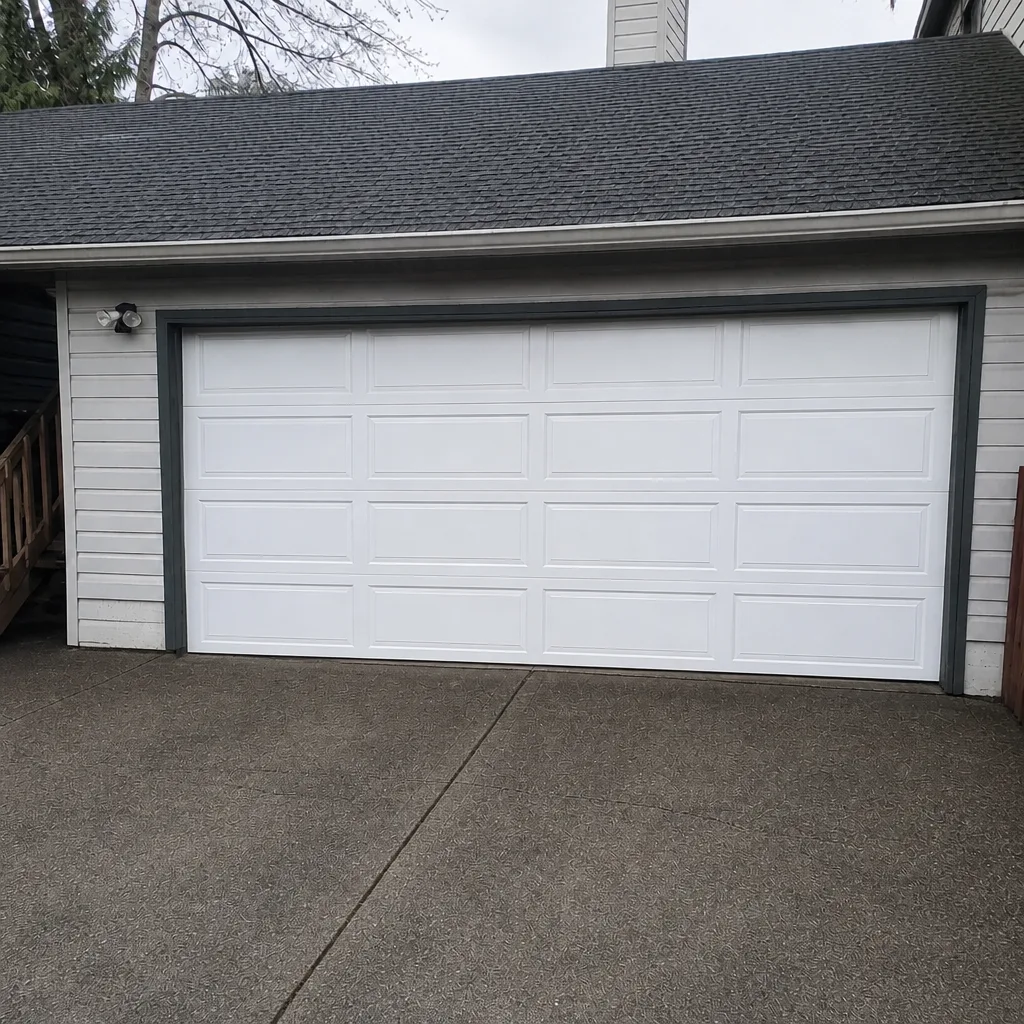 After
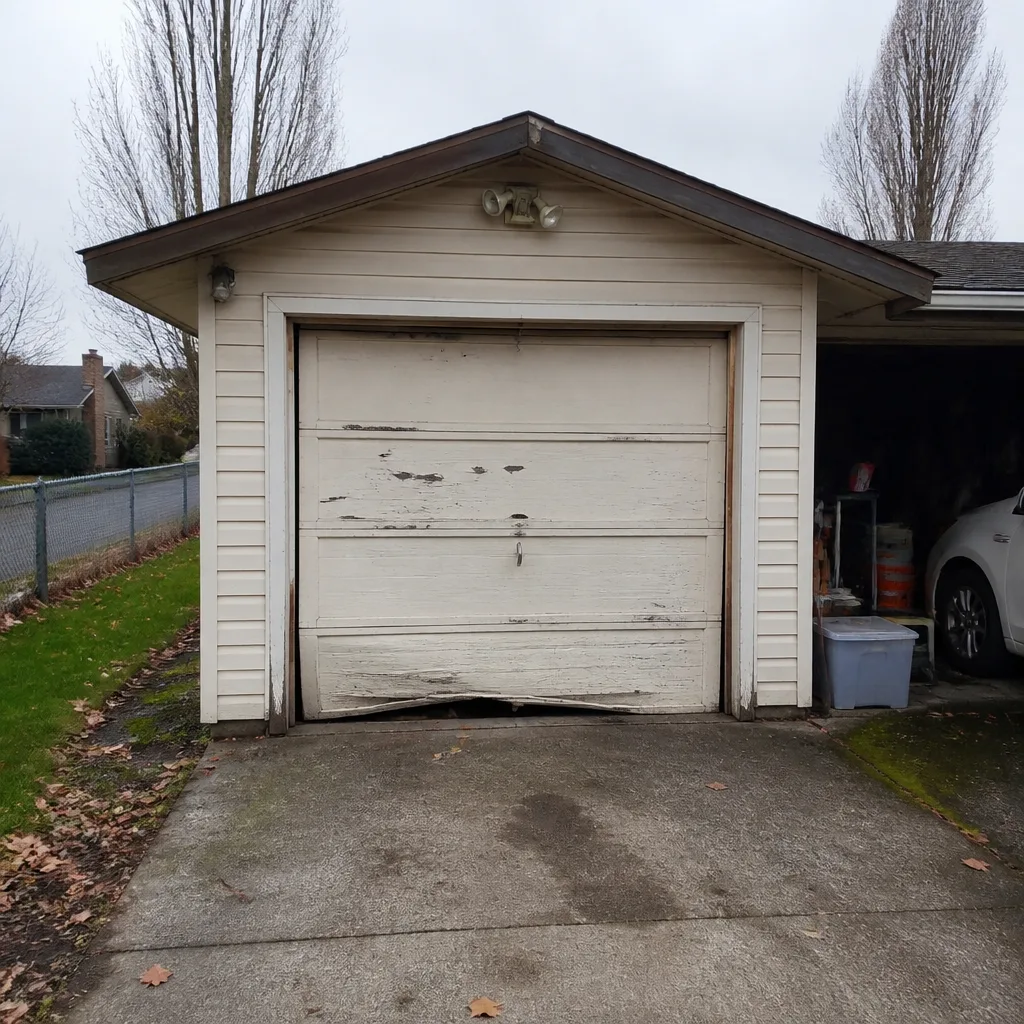 Before
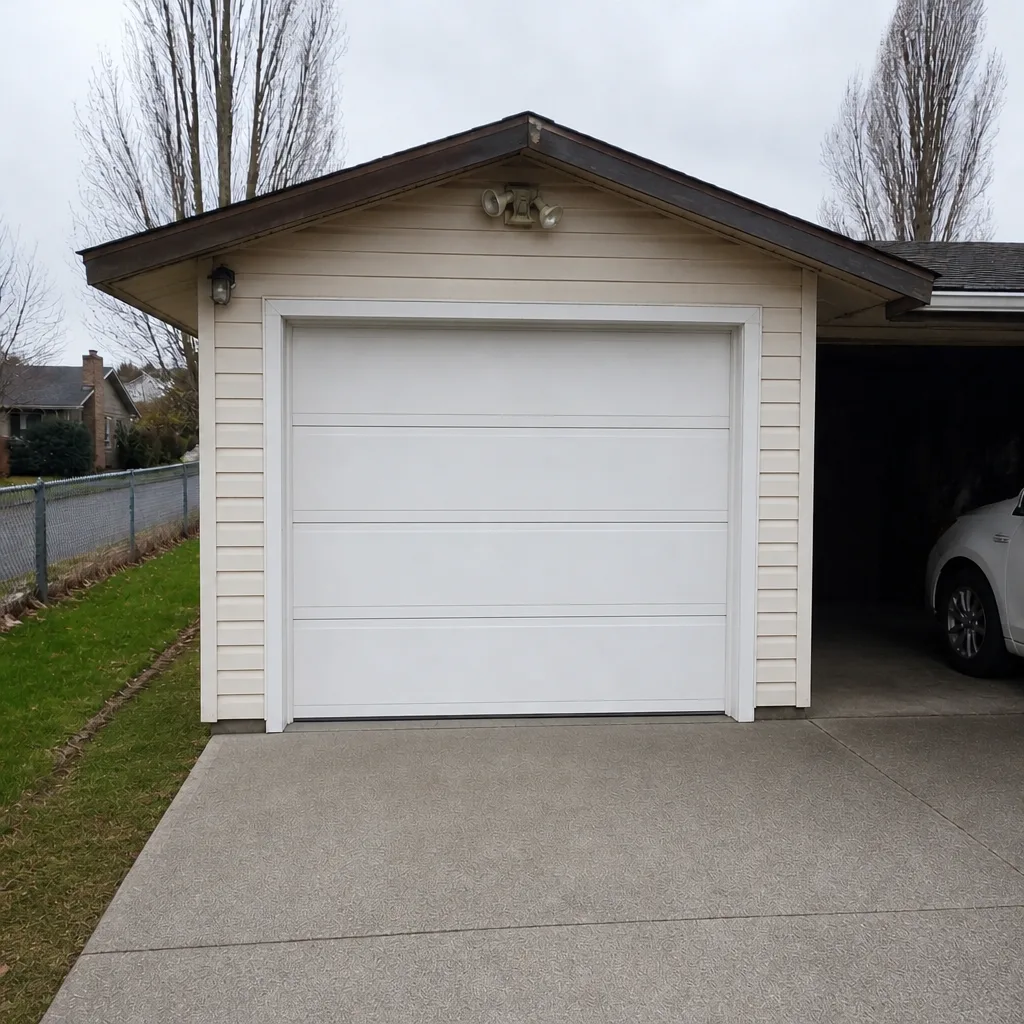 After
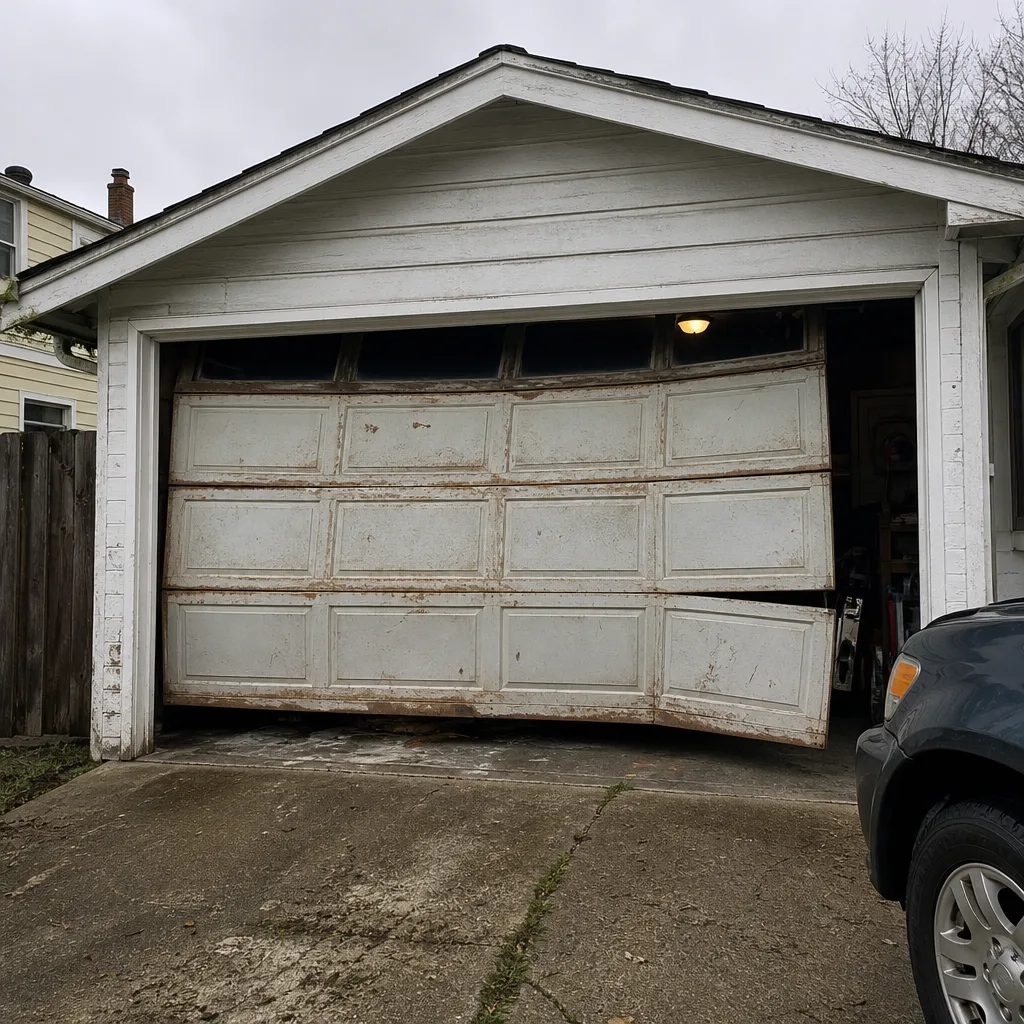 Before
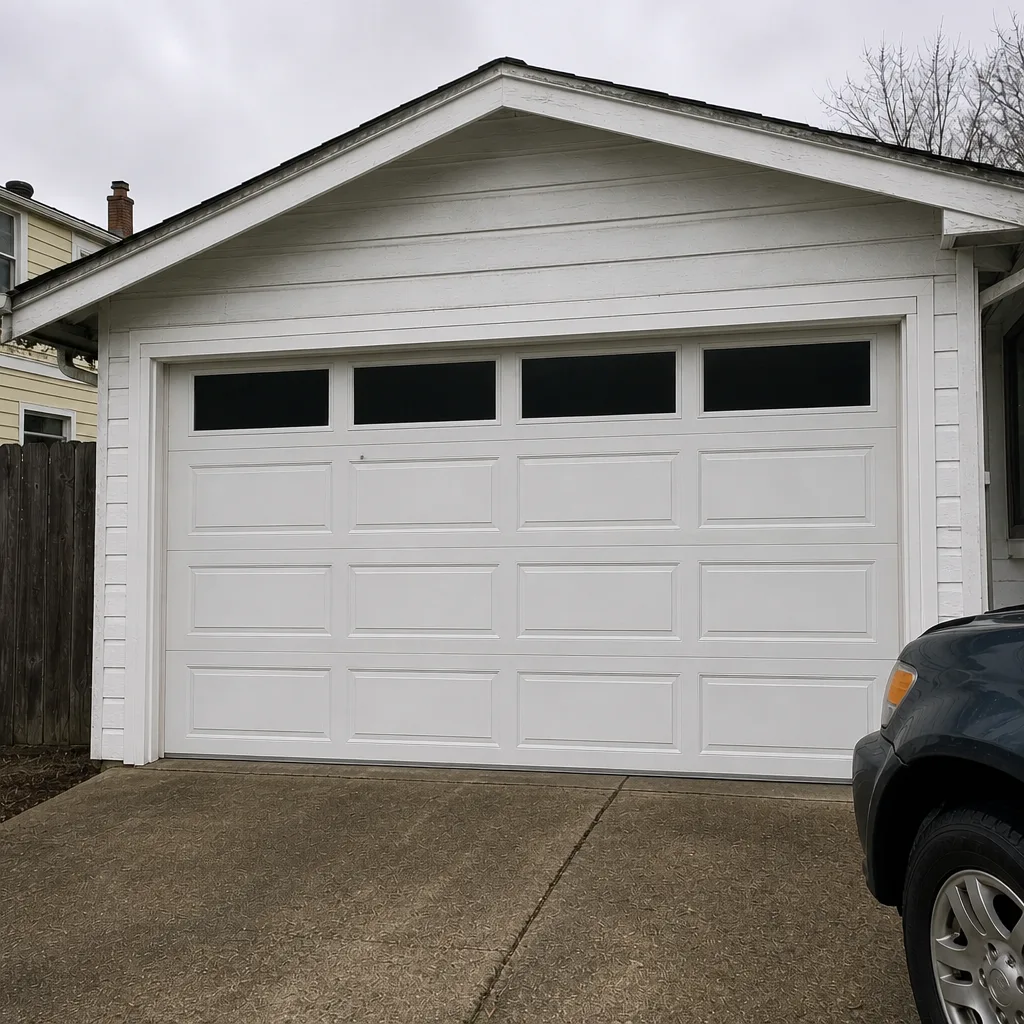 After
When to Call a Professional
Some jobs are straightforward for a homeowner – lubricating hinges, clearing the tracks, testing the safety reversal. Others call for someone who does this every day. Call a professional when a spring is broken or visibly damaged, when the door has come off its track or dropped on one side, when a cable is frayed or snapped, when the opener won’t respond and simple troubleshooting doesn’t fix it, or when the door has visibly warped, rusted through or rotted. Any of these involves either high-tension parts or a heavy door that can fall unexpectedly, and both deserve trained hands. If you’re unsure whether a problem is serious, that’s a good reason to have it looked at rather than wait for it to fail.
Kent Garage Door Repair Pros offers free estimates in Kent – call (877) 606-8952. Our technicians have up to 10 years of experience, we work on LiftMaster, Chamberlain, Genie, Clopay, Amarr, Wayne Dalton, Craftsman and Raynor systems, and the price is quoted and agreed before any work starts.
Frequently Asked Questions
Spring repair typically falls in a modest range for a single spring, with the exact cost depending on the door’s size and spring type; a matched pair is usually replaced together, so a pair runs roughly double. The written estimate sets the final price, and estimates are free. Call (877) 606-8952 for an exact quote.
We offer same-day and emergency service for urgent problems like a door stuck open, a snapped spring or an opener that’s failed. A stuck door leaves your home exposed, so we treat it as a priority. Call (877) 606-8952 and we’ll get you scheduled.
No. We quote and agree the price before any work starts, so the figure you accept is the figure you pay. If the diagnosis turns up something extra, we’ll explain it and get your agreement before proceeding, never after. Call (877) 606-8952 for a free estimate.
The local pros we connect you with are licensed and insured as their state requires, and they have up to 10 years of experience working on the brands we service. You’re not getting a generalist handyman guessing at your equipment. Call (877) 606-8952 to book an estimate.
Steel with a factory finish and a wood composite are the most moisture-tolerant choices here, while real wood needs regular sealing to hold up. The right pick depends on how much upkeep you want and whether your garage is attached or detached. We can walk you through the options for your home.
Permit rules vary by project and jurisdiction, so the right move is to ask the City of Kent’s building department before you start. We can help you understand what the job involves, but confirm the permit requirements with the city. Call (877) 606-8952 with questions about the work itself.
The Bottom Line
A garage door in Kent is a system, and treating it that way is the difference between a door that works for years and one that keeps demanding attention. The wet marine climate makes sealing, lubrication and moisture-resistant materials a priority. Your attached garage’s layout should drive the opener choice. R-value matters, but construction and sealing matter just as much. A multi-brand specialist saves you time when a part is needed. And the repair-replace-install decision starts with one question: is the door itself sound? Get the estimate in writing, and don’t touch a spring yourself. If you’d like a straight answer on your own door, we’re here to help.
Contact Us
Whether you’re chasing a repair, comparing doors for a replacement, or planning a new install, we’ll give you a clear diagnosis and a written price before any work starts. Connect with Kent Garage Door Repair Pros for a free estimate and honest advice about your specific equipment. Call (877) 606-8952 today – our technicians have up to 10 years of experience working on the brands you own.
Written by the team at Kent Garage Door Repair Pros.